Industry Knowledge
Next-Generation Automotive Windshields: How Advanced Simulation Is Driving Safer and Lighter Laminated Glass
The automotive glass industry is entering a new era where digital engineering is becoming as important as manufacturing itself. As vehicle safety regulations become more demanding and electric vehicles continue to prioritize lightweight design, manufacturers are seeking smarter ways to develop high-performance laminated windshields.
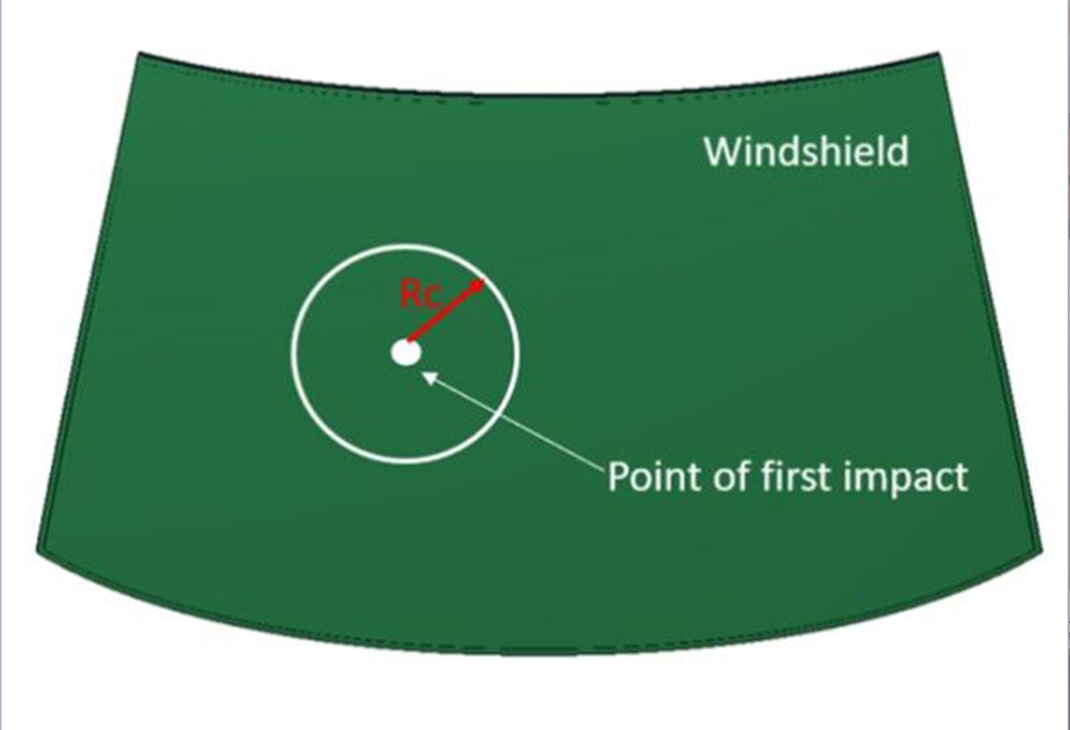
One of the most significant advances is the use of Finite Element Analysis (FEA) to simulate windshield performance before physical prototypes are produced. Instead of relying solely on repeated crash testing, engineers can now predict impact behavior, fracture patterns and structural performance through highly accurate computer simulations. Recent industry research demonstrates that validated FEA models can reliably evaluate different laminate thicknesses, glass types and asymmetric windshield structures while closely matching physical test results.
Why Windshield Design Is Becoming More Complex
Modern windshields are no longer simple laminated glass panels.
Today's automotive glass often integrates:
- ADAS camera systems
- Head-Up Display (HUD)
- Rain and light sensors
- Acoustic interlayers
- Solar control coatings
- Lightweight laminated structures
At the same time, manufacturers must satisfy increasingly strict pedestrian protection standards while improving optical quality and reducing overall vehicle weight.
Balancing these requirements makes windshield engineering significantly more challenging than in previous generations.
Simulation Is Transforming Product Development
Traditionally, developing a new windshield required numerous prototype samples followed by destructive testing.
Today, advanced simulation software enables engineers to evaluate:
- Different glass thickness combinations
- Various laminate structures
- Alternative interlayer configurations
- Multiple glass compositions
- Different windshield geometries
- Impact performance under various loading conditions
This virtual development process reduces both development time and engineering costs while allowing manufacturers to optimize designs much earlier in the product lifecycle.
Lightweight Laminated Glass Without Compromising Safety
Vehicle lightweighting remains one of the industry's highest priorities.
Reducing windshield weight contributes to:
- Better fuel economy
- Extended electric vehicle driving range
- Lower CO₂ emissions
- Easier vehicle handling
- Reduced manufacturing costs
Simulation technology allows engineers to compare conventional soda-lime laminated glass with advanced thin-glass or chemically strengthened glass solutions before production begins.
Research indicates that well-designed asymmetric laminated structures can maintain excellent pedestrian protection performance while delivering advantages in weight reduction, durability and optical quality.
Improving Pedestrian Protection Through Digital Engineering
Pedestrian safety has become one of the key evaluation criteria in modern vehicle development.
Instead of focusing only on passenger protection, engineers must also consider how windshield structures absorb energy during head-impact events.
Validated numerical simulation enables designers to:
- Predict head impact response
- Evaluate energy absorption
- Analyze crack propagation
- Estimate structural deformation
- Compare alternative windshield designs
These capabilities help reduce design risks before expensive physical testing begins.
Benefits for Automotive Glass Manufacturers
For glass manufacturers, simulation technology offers more than engineering convenience.
It provides measurable business value:
Faster Product Development
Virtual testing significantly reduces prototype cycles.
Lower Manufacturing Costs
Fewer physical samples mean lower material consumption.
Better Product Quality
Design optimization improves consistency before production begins.
Higher Production Efficiency
Validated designs reduce production adjustments and quality issues.
Improved Customer Confidence
Automotive OEMs increasingly expect suppliers to support products with engineering validation and simulation data.
The Role of Advanced Glass Processing Equipment
Even the most advanced windshield design depends on manufacturing precision.
Producing high-quality laminated automotive glass requires reliable processing equipment throughout the production line, including:
- Automatic Glass Cutting Line
- CNC Glass Cutting Table
- Glass Washing Machine
- Glass Bending Furnace
- Laminated Glass Production Line
- PVB Laminating Equipment
- Glass Inspection System
- Automatic Glass Handling Equipment
Every stage directly influences the final optical quality, dimensional accuracy and long-term durability of the windshield.
Digital Design Meets Intelligent Manufacturing
The future of automotive glass manufacturing combines two powerful technologies:
Digital Simulation + Intelligent Production Equipment
Simulation determines the optimal windshield structure.
Automation ensures that every windshield is manufactured according to that optimized design.
This integration enables manufacturers to deliver safer, lighter and higher-quality automotive glass while improving production efficiency and reducing operating costs.
Looking Ahead
As autonomous driving, electric vehicles and intelligent transportation continue to evolve, automotive glass will become even more sophisticated.
Manufacturers that combine advanced engineering simulation with automated glass processing equipment will be better positioned to meet future market demands.
Investing in intelligent manufacturing solutions today is not only about increasing productivity—it is about preparing for the next generation of automotive glazing technologies.
Why EASTGLAZ
EASTGLAZ provides advanced glass processing solutions for automotive and architectural glass manufacturers worldwide.
Our product portfolio includes:
- Automatic Glass Cutting Line
- CNC Glass Cutting Table
- Laminated Glass Production Line
- Glass Washing Machine
- Glass Handling Equipment
- Glass Storage System
- Complete Glass Processing Solutions
By combining reliable equipment with intelligent automation, EASTGLAZ helps manufacturers improve productivity, maintain consistent quality and support the production of next-generation
laminated glass.